
UK IPTV vs Cable: Real Cost & Feature Comparison
IPTV is almost always cheaper than cable in the UK, because a typical IPTV subscription costs a fraction of a cable package and skips....
On this page (12)
- Is IPTV cheaper than cable in the UK?
- What does cable TV really cost in the UK?
- What does an IPTV subscription cost in the UK?
- How do IPTV and cable compare side by side?
- What hidden costs come with cable TV?
- Are there any extra costs with IPTV?
- How do contracts and flexibility compare?
- How do channels and value for money compare?
- What about equipment and installation?
- So which offers better value for UK viewers?
- Frequently asked questions (FAQ)
- Conclusion
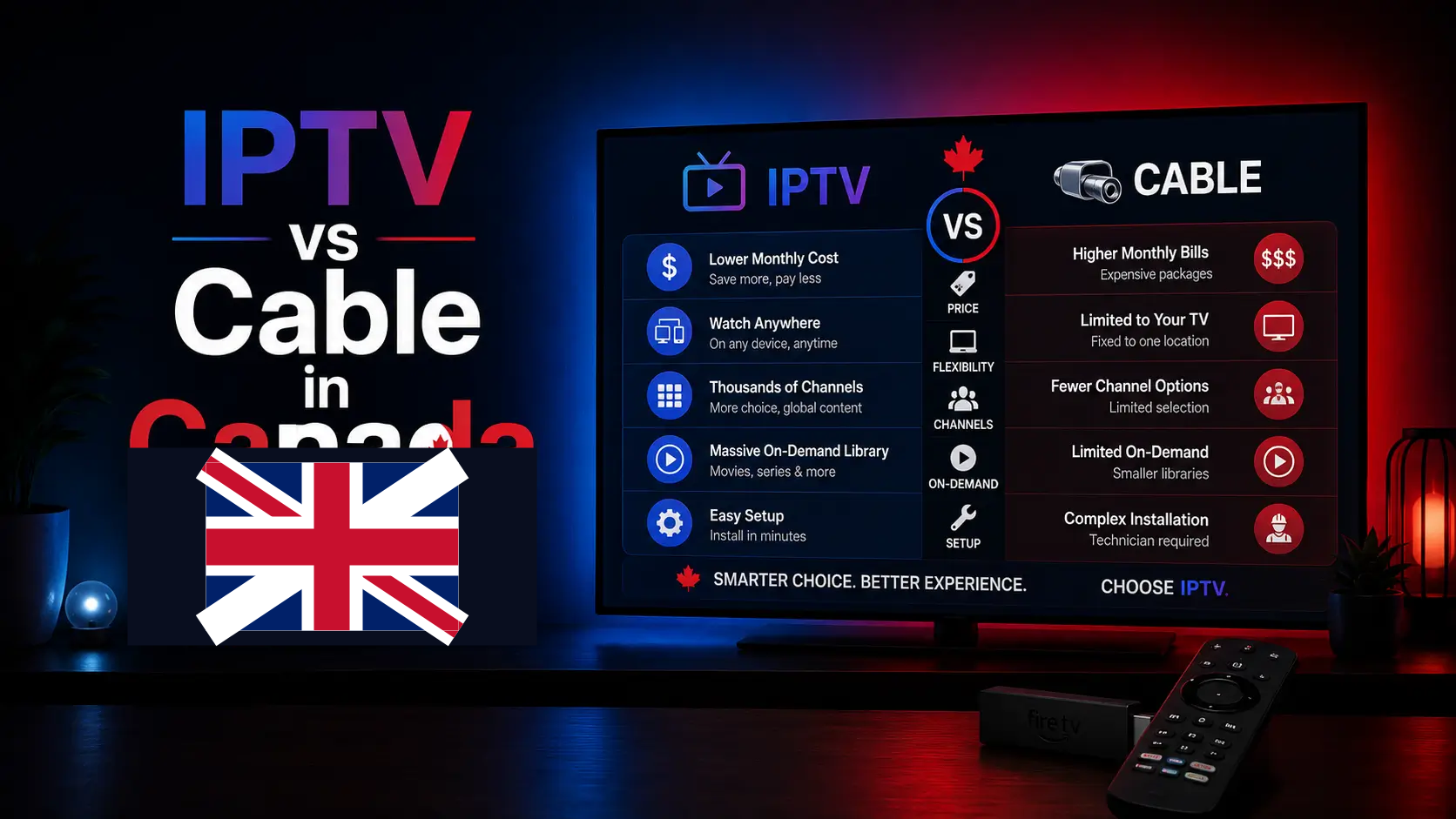
IPTV is almost always cheaper than cable in the UK, because a typical IPTV subscription costs a fraction of a cable package and skips most of the extra fees that drive up a cable bill. Where cable adds equipment rental, installation charges, and long contracts on top of the monthly price, IPTV usually runs on devices you already own, with no box to rent and no commitment.
The trade-off is that IPTV needs a decent internet connection and a trustworthy provider, while cable bundles everything into a single, more expensive bill. For households watching their budget, a reliable UK IPTV provider can deliver the same live channels and on-demand content for far less each month.
This guide breaks down what each option really costs, including the hidden charges, so you can compare them fairly.
Is IPTV cheaper than cable in the UK?
Yes, IPTV is usually significantly cheaper than cable in the UK. A standard cable television package, once you include equipment and fees, often lands somewhere between sixty and a hundred dollars or more per month, while many IPTV subscriptions fall in the range of roughly ten to twenty-five dollars.
The gap comes not just from the headline price but from everything cable adds around it, such as box rentals and contracts. IPTV strips most of that away, charging a simple monthly or prepaid fee for access.
Of course, exact prices vary by provider, region, and the channels you want, so the savings differ from one household to the next. Even so, the overall pattern is consistent: IPTV costs less for comparable viewing, and the difference grows once cable’s add-ons are counted. For a household watching closely, that monthly gap can add up to hundreds of pounds saved over a year.
What does cable TV really cost in the UK?
Cable TV in the UK costs more than its advertised price because the monthly package is only the starting point. A basic lineup may look affordable, but the popular packages most households actually want tend to sit in the higher range once sports, movies, and specialty channels are added.
On top of that, cable providers usually charge to rent the receiver box, often per television in the home, which quietly increases the bill. Many plans also carry installation or activation fees and lock you into a one- or two-year contract with penalties for leaving early.
Pricing frequently assumes you bundle television with internet, which can make the standalone cost of TV harder to judge. There may also be administrative or regional fees that appear only once the first bill arrives. Added together, these layers explain why a cable bill often feels higher than expected.
What does an IPTV subscription cost in the UK?
An IPTV subscription in the UK typically costs a simple, flat monthly fee with very little added on top. Most services charge somewhere in the region of ten to twenty-five dollars per month, depending on the channel selection and the length of plan you choose.
There is normally no equipment to rent, because IPTV runs on devices you already own, such as a smart TV, streaming box, phone, or computer. Many providers also offer prepaid options for several months or a year, which can lower the effective monthly cost.
Because plans are usually month-to-month or prepaid, you are not tied into a long contract. For a fuller breakdown of typical plan prices, see our IPTV pricing guide. The result is a predictable, low price that is easy to compare against a cable bill.
How do IPTV and cable compare side by side?
The clearest way to see the difference is to line up the main costs together. The table below compares typical IPTV and cable expenses in the UK, using general ranges rather than any single provider’s pricing. Treat the figures as a guide, since your actual cost depends on the package and provider you choose.
| Cost factor | IPTV | Cable TV |
| Monthly price | ~£10–£25 | ~£60–£100+ (popular packages) |
| Equipment rental | None (your own device) | ~£10–£20 per box, per month |
| Installation / activation | None | ~£50–£100 one-time |
| Contract | Usually none (monthly/prepaid) | Often 1–2 years |
| Channels & on-demand | Large lineup, VOD included | Varies; add-ons cost extra |
| Internet required | Yes (your own connection) | Usually bundled |
What hidden costs come with cable TV?
Cable’s biggest hidden costs are the charges that sit outside the advertised monthly package. These extras are easy to overlook when comparing prices, yet they add up quickly over the length of a contract. Before signing up for cable, it helps to account for each of the following.
- Equipment rental for the receiver box, often charged per television.
- Installation or activation fees when service is first set up.
- Early-cancellation penalties if you leave before the contract ends.
- Price increases after a promotional period expires.
- Add-on fees for premium channels or specialty packages.
Are there any extra costs with IPTV?
IPTV does have a couple of costs to keep in mind, though they are usually smaller and often already covered. The main requirement is a reliable internet connection, which most British homes already pay for, so it rarely counts as a new expense. You also need a compatible device to watch on, but a smart TV, streaming box, phone, or computer you already own will do the job.
Some IPTV player apps offer optional paid versions with extra features, but the app fee is separate and never replaces the subscription. There is no box rental, no installation visit, and no long contract to factor in.
If you already have home internet and a TV or streaming device, your real added cost is often just the subscription itself. Compared with cable’s stack of add-ons, IPTV’s extra costs are minimal.
How do contracts and flexibility compare?
IPTV is far more flexible than cable when it comes to commitment. Cable plans frequently require a one- or two-year contract, with fees if you cancel early, which ties you to a provider even if your needs change.
IPTV, by contrast, is usually offered month-to-month or as a prepaid plan, so you can stop or switch without penalty. This flexibility matters for households that want to test a service or adjust their spending over time, without the fear of a cancellation fee. It also encourages providers to keep earning your business month after month rather than relying on a locked-in contract.
The Public Interest Advocacy Centre, a respected British non-profit that advocates for fair contract terms and affordable pricing, has long highlighted concerns about restrictive contracts and rising communications costs. With IPTV, those concerns largely fall away, since there is little to lock you in, and switching providers is as simple as cancelling a monthly plan and starting another.
How do channels and value for money compare?
For the price, IPTV generally offers more channels and on-demand content per pound than cable. Cable packages are tiered, so reaching the channels you want often means paying for a higher bundle full of channels you do not watch.
Many IPTV subscriptions include a broad lineup of live channels plus a video-on-demand library as part of the standard price, with no extra tiers to climb. That said, the value depends on a provider that is stable and reliable, not just one with the longest channel list.
A huge number of channels means little if the service buffers or drops out, so reliability is part of the value equation. It is also worth remembering that on-demand libraries bundled into many IPTV plans would often be paid add-ons on cable. Judged on cost per channel and included extras, IPTV usually delivers stronger value.
What about equipment and installation?
IPTV avoids the equipment and installation costs that come built into cable service. With cable, a technician often installs the service and you rent a receiver box for each television, adding both an upfront fee and an ongoing monthly charge.
IPTV needs no dedicated box, because it runs as an app on devices most homes already have, and setup takes only a few minutes once you enter your login details. There is no installation appointment to schedule and nothing to return if you cancel.
For a household with several televisions, avoiding multiple box rentals can mean meaningful monthly savings that add up over a year. You also skip the hassle of returning rented hardware when you decide to leave. In short, IPTV shifts you from rented hardware to devices you already own.
So which offers better value for UK viewers?
For most UK viewers focused on cost, IPTV offers clearly better value than cable. It delivers comparable live channels and on-demand content for a lower monthly price, without equipment rental, installation fees, or long contracts.
The main conditions are a stable internet connection, which most homes already have, and choosing a legitimate provider that holds the proper rights to the content it distributes.
Cable still appeals to viewers who prefer a single bundled bill and a provider-installed setup, and that convenience has real value for some households. There is also comfort in a familiar, hardware-based service that someone else sets up for you.
But on pure cost, IPTV is the more affordable choice in nearly every comparison. Weigh the savings against your need for convenience to decide what fits your home.
Frequently asked questions (FAQ)
Is IPTV really cheaper than cable in the UK?
Yes, in most cases. A typical IPTV subscription costs far less per month than a comparable cable package, and it avoids box rentals, installation fees, and contracts that inflate a cable bill.
Does IPTV have any monthly fees beyond the subscription?
Not usually. The main ongoing cost is your existing internet service. There is no equipment rental, and any paid app upgrade is optional and separate from the subscription.
Do I need to pay for installation with IPTV?
No. IPTV runs as an app on devices you already own, so there is no installation visit and no activation fee. Setup takes only a few minutes.
Why does my cable bill seem higher than the advertised price?
Advertised cable prices often exclude box rentals, fees, and post-promotion increases. Once those are added, the real monthly cost is usually higher than the headline figure, sometimes by a wide margin.
Can IPTV fully replace cable?
For many households, yes. IPTV provides live channels and on-demand content similar to cable, as long as you have a stable internet connection and a reliable provider. Some viewers keep a basic antenna for local channels as a backup, but it is not required.
Is there a contract with IPTV?
Usually not. Most IPTV plans are month-to-month or prepaid, so you can cancel or switch without the penalties common to cable contracts. This makes it easy to try a service before committing for longer.
What do I still need to pay for with IPTV?
You need an internet connection and a compatible device, both of which most homes already have. Everything else is included in the subscription price, with no rental hardware or activation fees to worry about.
Conclusion
On a straight cost comparison, IPTV is the more affordable way to watch television in the UK, thanks to lower monthly prices and the absence of equipment rentals, installation charges, and long contracts.
Cable bundles convenience and a single bill, which some households value, but that convenience comes at a noticeably higher price. The key conditions for IPTV are a stable internet connection, which most homes already pay for, and a legitimate, reliable provider.
Add up the monthly fee, the hidden extras, and the commitment, and IPTV consistently comes out ahead on value. The savings are largest for homes with several televisions, where cable’s per-box rentals stack up fastest.
For budget-conscious UK viewers, IPTV is usually the smarter financial choice, provided you pick a reliable, legitimate provider and have a stable connection to enjoy it.
Your free trial login works in every app in this article. Twelve hours of the full service, no card, then choose a plan or stop.
- No credit card
- Login by email in minutes
- Setup guides for every device
